
Book Review, Reflection
A friend recommended a book based on my private social media musings, and it exposed a striking similarity to my conclusions, ergo, a fantastic read ;-) 5 stars for Helen Pluckrose and James Lindsay

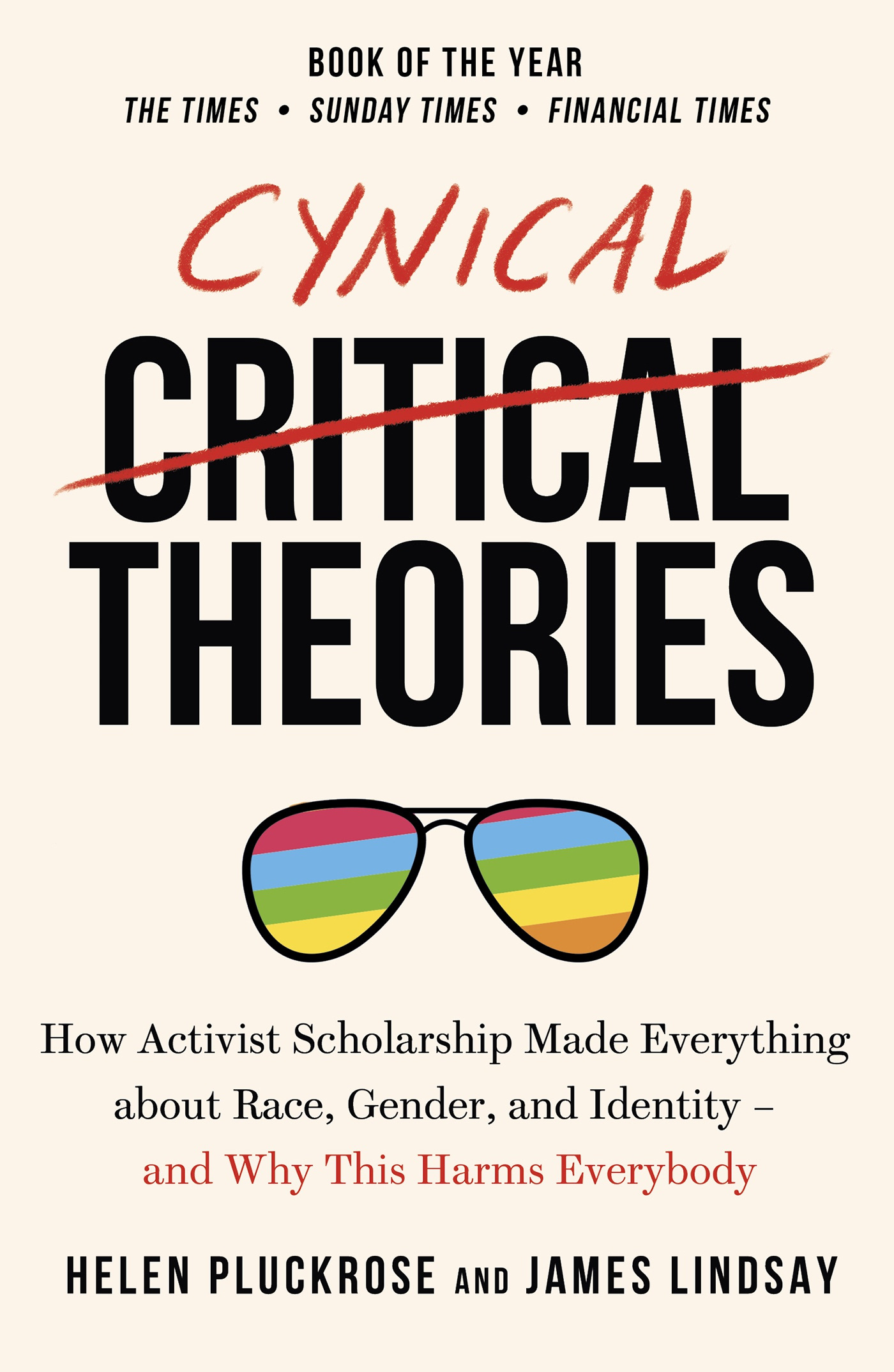
A friend inadvertently recommended a book, Cynical Theories, based on my musings in one of my social media personas, thinking I had already been informed by it. The closeness of the parallels and proximity of ideas is affirming, and apparently that’s the most important thing for one’s mental health. While I find it flattering to find my tribe, it seems we are either vanishingly rare fringe dwellers, or we’re extremely quiet. I’m thinking the latter, my scared friends.
Cynical Theories offers a genealogy of ideas that moved from high theory into everyday institutions. It tells a story about how postmodern scepticism, once limited to invitational lectures and content-seeking journals, morphed into applied movements that claim scientific authority while rejecting the very tests that give knowledge its legitimacy. The book is not a jeremiad against compassion, nor a denial that discrimination exists, it is a warning about method. When activism is treated as method, institutions loosen their grip on the practices that make truth seeking and fair dealing possible. That is the hinge on which this entire debate turns, and it is also where the idea of Intersectionality-as-Religion becomes a useful diagnostic.
The religious analogy does not trivialise injustice, real or perceived, I truly understand how pernicious the feelings of injustice are, hyper-amplified for some personality types, and I see that I generate friction within those people, and there is no satisfaction in that for me- quite the opposite, pity and sadness, depressive... The religious analogy clarifies how a cluster of concepts can become a creed with its own dogmas, rituals, priesthood, and punishments, as this apostate/atheist can attest ad hominem. Original sin appears as privilege, a word that has become so abused, it is auditory aposematism to me. Redemption arrives through perpetual confession and training. Saints and martyrs are curated through identity narratives that crowd out nuance and offer sanctuary from criticism with umbrellas carried at eye level. Heresy is defined as the refusal to repeat a formula, even when the refusal stems from evidence, principle or simple uncertainty. None of this requires bad intentions. It only requires incentives that reward moral certainty over careful inquiry, and to scratch the veneer invites shock wave impacts from psychological collapse.
Cynical Theories traces how we reached this point. First came the move from suspicious reading of texts to suspicious reading of people and institutions. Power was presented as omnipresent and inescapable and in everything. If power is everywhere, then disagreement becomes suspect by default. Second came the centring of standpoint epistemology and the idea that knowledge is licensed primarily by identity and personal opinion. Lived experience is certainly part of knowledge, but when it is elevated to trump card, it displaces the evidentiary standards that let us compare stories, test causal claims and change our minds. Third came the managerial turn, where universities, agencies and corporations adopted compliance frameworks that convert contested ideas into brutally enforced operational policy. Procedure, once a shield for the minority of one, becomes a set of instruments for punishing deviance. That is how a movement that brands itself as liberation can act as a kind of soft theocracy inside workplaces, schools and public bodies- the antithesis of liberalism.
The problem, then, is not that social equality is a bad goal. The problem is that the method chosen to pursue it can erode the very conditions that allow free people to identify problems and fix them together. Liberalism is not a vibe, man. It is a set of practices. Pluralism is not a slogan. It is the demanding work of living with deep differences without reaching for coercion. When those practices are displaced by creedal compliance, the result is not solidarity. It is a brittle culture that is prone to witch hunts and blind spots, and that often harms the vulnerable it claims to protect, something I know will be (is being) explored by lawyers seeking compensation for their clients.
There are at least five risks that follow from this displacement.
First, procedural erosion. Liberal institutions run on equal rules that do not ask for ideological vows. When outcome targets and speech rules are enforced without clear limits, neutrality gives way to discretionary tribunals. Process ceases to be a referee and becomes a partisan player. The shift feels small while it happens, yet it is large in its effects.
Second, epistemic capture. If lived experience is treated as sufficient on its own, then mixed methods inquiry is recast as an insult, and offence consumes the bandwidth of the minds of the offended. Data that complicates the narrative is proof of guilt. Research becomes advocacy, and advocacy becomes policy without the friction that normally protects the public from fads. It’s the exact wrong kind of “frictionlessnessly” I want to see emerge from these days just behind and ahead of us.
Third, civic fragmentation. When citizens are ranked by grievance hierarchies, coalitions fracture. People learn to speak in ritual language to avoid trouble. Trust thins out because no one is sure if disagreement will be taken in good faith. The polity loses the muscle memory of compromise and the public’s trust in institutions is further eroded.
Fourth, self censorship. The cost of a mistake rises. People retreat to silence. Institutions lose internal feedback, ergo productivity and effectiveness. Errors persist because the signal of dissent is treated as a threat rather than an early warning.
Fifth, policy brittleness. When debate is taboo, course correction is rare. Programs entrench even when they miss their target, because withdrawal is framed as betrayal. I feel the polity have become used to using courts as a backstop for willful incompetence, and the risk there is that a judge, or panel of judges, are supported by poorly made law, and in the gap of legal ambiguity, are likely to succumb to their own thoughts and feelings.
None of these risks require central censors. They arise from the alignment of incentives. Training modules are scored by perceived safety, not by their impact on capability. HR departments are rewarded for harmony, not for fairness, and sometimes motivated by psychopathy that seemingly plagues the vocation. Quick-to-panic Managers fear reputational storms more than they fear evaporating viewpoint diversity. Good people do risk management, not liberal governance. The result is faux liberalism. It sounds humane and progressive, yet it functions as a culture of soft compulsion that, if tested, quickly brutalises the unsuspecting example-to-be-made-of; it’s all treading carefully amongst animal traps hidden in the leaves. Exhausting.
The alternative is not reaction, it is a recommitment to liberal process that can host robust moral disagreement while still addressing unfair barriers. That requires a specific set of guardrails.
Firstly, re-anchor institutions in first principles. Universities, agencies, councils and corporates should adopt viewpoint neutral charters that protect speech short of unlawful vilification, forbid compelled ideological speech and require due process for complaints. If equity measures are proposed, they should identify a specific barrier that can be measured, be time limited by default and include a public evaluation plan. Equality before the law remains the default. Departures should be justified with evidence and designed to sunset. This is something I have real power over, and will use in my decision making.
Secondly, prioritise methodological standards over moral posture. Funding, hiring and promotion should reward methods, transparency and replicability. Lived experience remains welcome as qualitative input, but it should be paired with data, experiments or credible inference. The rule of thumb is simple, that if a claim cannot in principle be tested, it should not be used to compel others. Again, my responsibility here is in debate during policy drafting.
Thirdly, demand pluralism impact statements for any rule that polices language or belief. Before adopting new codes, require answers to basic questions. Does this rule compel assent to a contested idea? Can dissent be expressed without penalty? What are the measurable risks to participation for people across all groups? What is the appeal path if a person believes they have been punished for viewpoint rather than behaviour? The goal is to make it hard to smuggle creed into conduct codes. I should construct a flow chart for this to share with my peers and our officers. Vexatious litigants are an eternal complaint of mine, yet it is a test of the systems enduring nature that it can survive them, even if their targets, most unfairly, cannot.
Fourthly, insist on sunshine and contestability. Publish the evidentiary basis for major reforms, the alternatives considered, the expected trade offs and a clean plan for repeal if promised outcomes are not met. This is sorely lacking. Pragmatism is provable with its pragmatic outcomes. Attach structured debates or citizens juries to large changes and preserve minority reports (a Citizen’s Voice, perhaps? Too soon!). The point is not theatre, it is to keep live options open and to normalise dissent as part of institutional learning- healthy debate actually requires debate.
Fifthly, reform HR (or People and Culture, in the contemporary parlance) and DEI around behaviour and skill, and this is already happening, albeit in a way that has been politicised instead of having evolved pragmatically through its obvious failures and successes. Focus on anti-harassment law, conflict resolution, perspective taking and the craft of collaboration. Drop belief compliance. Create appeal rights for staff and students disciplined for speech. Require specific harms, not feelings alone, and apply the standard evenly. My personal philosophy has adopted, most wisely, that collaboration delivers pragmatic compromise, and makes for the best method to make change. I use this in my politics.
Sixth, protect academic freedom with accountability to method. Adopt Chicago style free expression policies and Kalven style institutional neutrality. Install method review panels that scrutinise research design without regard to topic or conclusion. Restore the right to be wrong when a person has done the work. A university exists to discover and transmit knowledge. That mission requires the broadest possible protection for speech, debate and inquiry. The default is to permit expression, including ideas that are wrong, offensive or uncivil. Offence alone is not a reason to restrict speech. A university, as an institution, should not take official positions on the public controversies of the day. By staying neutral, the institution protects the scholarly independence of its members and preserves a home for genuine diversity of viewpoints.
Seventh, teach better civics. Equip students and staff with the harm principle, Popper on falsifiability, basic Bayesian reasoning and the Australian legal boundaries for speech. Make steel manning a norm. Reward people who can summarise the strongest version of what they oppose before they argue against it.
Eighth, design equity that is balanced and legitimate. Where barriers are real, prefer means tested or barrier targeted remedies that lift capability and access for anyone who meets the criteria. The public is more likely to support reforms that feel fair and reversible, take advantage of the culture’s idea of a Fair Go.
Finally, measure what matters. Track procedural fairness, viewpoint diversity and climate indicators of self censorship. Use the data to tune culture without encroaching on conscience. We could debate around actual outcomes, rather than unfalsifiable religious beliefs. This would encourage us to try new ideas, and that’s what’s evolved universal liberalism to where it is now.
These guardrails do more than defend old liberties. They build a platform where reform can succeed without demanding creedal submission. The country needs that platform because we face real problems that require cooperation across deep moral difference. Liberalism is the technology that allows this. Pluralism is the ethic that keeps it decent.
There is a specifically Australian dimension to this story. We like to explain our political culture through egalitarian self-image. We speak about the Fair Go as if it were a folk inheritance that arrives fully formed. In truth, the fair go is an outcome of liberalism and pluralism. It rests on a commitment to equal rules, open contest, the humility to accept that no group has a monopoly on truth. Egalitarianism, when it hardens into an identity, can be misused as a cover for coercion. People declare that equality demands a creed, then punish those who refuse it. The fair go evaporates in the very moment it is claimed as a tribal badge. It survives when we treat it as a practice, not as a posture.
This has implications for the Australian Labor Party, which carries both a moral tradition and a governing responsibility. A party that sees itself as the steward of fairness is naturally tempted by frameworks that promise quick moral clarity. That temptation is dangerous, and that is where I think many have presently come unstuck. The risks for a captured Labor Party are clear. Policy may drift from universal service delivery to identity brokerage. Internal debate may narrow as members fear reputational discipline as can be seen in the recent brutal purges within the Australian Greens over the cardinal sins issued from Intersectionality-as-Religion. Candidate selection and staffing may tilt toward true believers in ways that weaken contact with working class pluralities. The party may become less able to adjudicate conflicts between protected claims and general laws. Public trust, once lost, is hard to rebuild, just look the problems in the UK and Ireland, accessible to us through common language- they are the precise templates to avoid, and we should reconsider their pathways to us as well as our shared dependencies.
The internal discussion that Labor needs is straightforward and urgent. First, clarify the foundation. The party’s commitment is to liberal democracy and pluralism as the means that make egalitarian outcomes possible. Say this plainly. Second, separate creed from conduct. Codes must police behaviour, not belief. Third, recommit to evidence. Require public, testable rationale for equity programs, with time limits and clear exit ramps. Fourth, protect internal dissent. Encourage caucus culture where people can disagree without fear of moral denunciation. Fifth, audit the pipeline. Ensure that candidate and staff pathways draw from the full diversity of Australian life, including people who are allergic to creeds but loyal to fairness. Sixth, emphasise the fair go as a practice. Tie it to neutral rules, honest trade offs and practical service. Make it clear that the fair go flows from liberalism and pluralism, not from an adopted identity called egalitarianism. If you’re going to prioritise an identity above all others, it should be the person who earns their income through their labour rather than their capital, both financial and social- for goodness’ sake, it’s literally in the name of the party!
If Labor can hold that line, it can lead the country away from a new authoritarianism that presents as kindness but functions as control. It can show that a fair society is built by open argument, equal rules and reversible policies, not by pampered creeds concocted in American universities. That is the old promise of liberal democracy. It remains the best path for a modern, diverse Australia.
I highly recommend this book, and I am curious of others’ reflections.
I will, from this, craft universal law that I will advocate for at the federal level, either via the mechanisms of the party, or through the opportunity of the opposition party- I don’t care much for political point scoring, I just want the outcomes from the pragmatism.